
Premier League’s Corner Crackdown: Who Wins, Who Loses, and Where the Betting Value Lies


Real Madrid loanee scores first career hat-trick in stunning Lyon debut
Something quietly significant is happening at the start of this Premier League season. Referees have been told to stop turning a blind eye to the wrestling matches that have been playing out at corners and free-kicks for years. If they follow through, and that is a big if, the ripple effect on betting markets could be more meaningful than most punters realise.
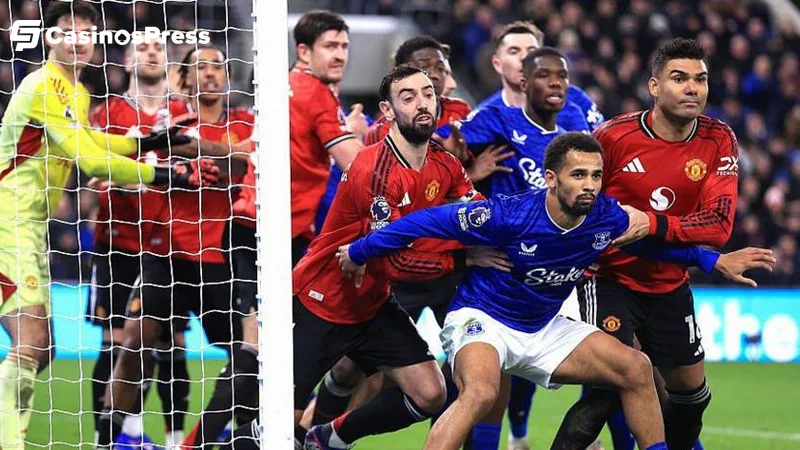
The Chaos That Made Referees Finally Act
Anyone who watched Premier League football last season knows how bad it got. Defenders clamping attackers, strikers grabbing shirts, players bear-hugging each other while the ball was still in the air. It became so routine that nobody even complained anymore, which is exactly the problem.
The tipping point came when West Ham had a goal disallowed against Arsenal in May, with up to five potential fouls happening simultaneously in the box. Nobody knew who to blame because everyone was at it. Referees, players and coaches all came together over the summer and the message was clear: something has to change.
The actual laws haven't been rewritten. What has changed is the instruction to officials. They've been told to penalise what they see, more quickly, with fewer warnings. Defenders who have their back to the ball with their only purpose being to stop an attacker moving will now be punished. Arms around necks, two-handed holds, sustained shirt-grabbing with no attempt to play the ball. All of it is now in the firing line.
Arsenal, United and the Set-Piece Food Chain
Last season, Premier League clubs scored 269 goals from set-pieces, and that 25.7% share of total goals was the highest of any top European league. That number matters because it tells us how heavily clubs have built their tactics around dead-ball situations, which means a crackdown on holding could genuinely reshape the league table.
Arsenal were the undisputed kings of this. Twenty-five goals scored from set-pieces and only seven conceded. That double dominance was built partly on clever routines and partly on some very physical movement in the box. If the new Premier League officiating standard bites, they face pressure from both ends. Their routines might generate more fouls in their favour at one end, but they could also be on the wrong side of calls at the other.
Manchester United scored 21 set-piece goals, Tottenham 19 despite a difficult season overall. Those numbers reflect real tactical investment and any disruption to that could hurt their output early on.
The clubs that might quietly benefit are the ones who struggled to defend set-pieces. Liverpool conceded 19 from dead balls last season, the worst in the league. Chelsea and Newcastle were close behind on 17. If attackers are being wrestled out of the way and referees are finally calling it, those defensive records should improve without those clubs necessarily changing anything themselves.
Why This Matters for Your Bets
Here's where it gets genuinely useful for anyone with money on the Premier League this season.
If referees are stronger in the opening weeks, we would expect to see a short-term spike in penalties awarded from set-pieces. Betting markets price in historical penalty frequency, and if that frequency increases, the value shifts. Any-time scorer bets on players who are strong aerial threats could also move, because clean delivery and cleaner positioning means better chances.
Teams like Liverpool and Newcastle, who conceded heavily from set-pieces, could see their defensive odds shorten if the crackdown holds. Backing them in clean sheet markets early in the season while prices still reflect last year's numbers might represent value before the market adjusts.
The bigger question is whether this lasts. Referees have been told to crack down at the start of seasons before and by December we're back to the same chaos. If that pattern repeats, any early-season pricing shift will correct itself, and getting in before that correction could be the smartest move.
We wouldn't bet heavily on the crackdown lasting the full season. The history here is not encouraging. But in the opening six to eight weeks, when officials are under the most scrutiny to follow through, the volume of set-piece penalties could genuinely be higher than the market expects.
The smarter bet isn't on any one team. It's on understanding that dead-ball football just got a little less predictable, and markets built on last season's data haven't caught up yet.
Editorial Note: Marcus Osei
Senior football writer and tactical analyst with 12+ years covering the Premier League, Champions League, and world football. Born in Accra, raised between London and Kuala Lumpur.