
Franco Baresi: The Last of the True Defenders


Real Madrid loanee scores first career hat-trick in stunning Lyon debut
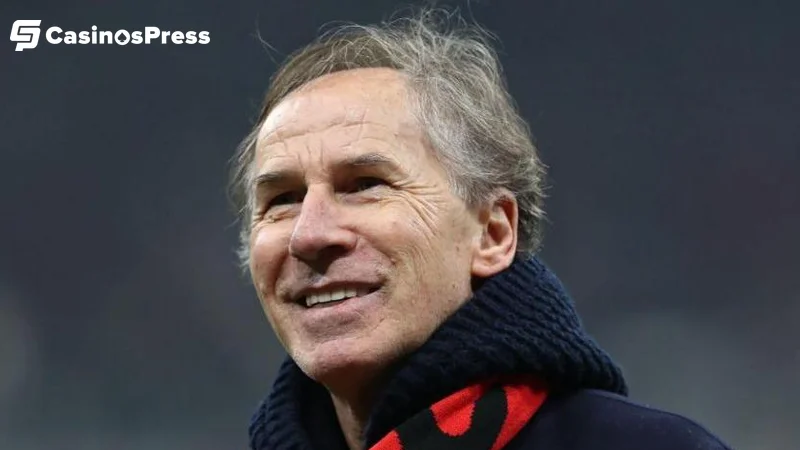
Football lost one of its giants this week. Franco Baresi, the AC Milan captain who defined what it meant to be a defender, has passed away at the age of 66 following surgery to remove a lung nodule earlier this year.
The football world is grieving, and rightly so. This was not just a great player. This was the blueprint.
The Man Who Made Defending Look Like an Art Form
Baresi spent 20 years at AC Milan, every single one of them in the famous red and black. From 1977 to 1997, he made 719 appearances, captained the side for 15 seasons and lifted six Serie A titles along with three European Cups. Those numbers alone would make him a legend. But stats don't capture what made Baresi special.
He read the game differently to everyone else. While other defenders reacted, Baresi anticipated. He was rarely beaten because he rarely put himself in a position where he needed to be. His positioning, his timing, his ability to organise those around him, it all combined to produce something that hasn't been replicated since.
He was the sweeper in the truest sense of the word, the last line before the goalkeeper, and he made it look effortless.
The Milan Back Four That Changed European Football
Baresi didn't do it alone, of course. Alongside Paolo Maldini, Alessandro Costacurta and Mauro Tassotti, he formed the backbone of one of the most feared defences in football history. The Milan side of the late 1980s and early 1990s didn't just win, they suffocated opponents. Games were decided before they even started.
That defensive unit set the standard for an entire generation of coaches. The principles they played under, compact shape, high line, relentless organisation, became the template for modern pressing football. When people talk about tactical evolution in the game, this is where a huge part of that conversation begins.
In our view, football hasn't seen a defensive unit to match them since. There have been great defences, but none with the same combination of individual brilliance and collective understanding.
The 1994 World Cup Final and the Penalty That Stays With You
The image most people carry of Baresi is one laced with both courage and heartbreak. At the 1994 World Cup, he returned from a serious knee injury to play in the final against Brazil. He barely had time to recover, yet he stepped onto the pitch in Pasadena and largely kept Romario and Bebeto quiet across 90 minutes and extra time in a 0-0 draw.
Then came the shootout. Baresi stepped up first. He missed.
Brazil won 3-2, and football had its penalty shootout moment long before the world got used to them. What's often forgotten is that Baresi chose to go first. That's leadership. That's character. Missing didn't define him, the fact he volunteered to carry the weight of an entire nation did.
Italy capped him 81 times. He was part of the 1982 World Cup winning squad. His international record alone would satisfy most. The 1994 final simply adds another layer to a career full of complexity and drama.
A Standard the Modern Game Still Chases
Baresi retired in 1997, Milan retired the number six shirt and in 2020 he became honorary vice-president of the club. Football doesn't often honour its people that way, which tells you everything about the respect he commanded.
His last public appearance was at the San Siro for the Winter Olympics opening ceremony in February. A fitting stage for someone who had spent so much of his life in that stadium.
In an era where football obsesses over forwards and goals and attacking metrics, Baresi is a reminder that defending, real defending, is a skill that demands just as much football intelligence as anything else on the pitch. The modern game has largely moved away from the sweeper role he made famous. In some ways, that's a loss the sport is still yet to properly reckon with.
We won't see his kind again. Franco Baresi was, and remains, the measuring stick by which every defender who came after him has been judged.
Editorial Note: Marcus Osei
Senior football writer and tactical analyst with 12+ years covering the Premier League, Champions League, and world football. Born in Accra, raised between London and Kuala Lumpur.