
Infantino vs Uefa: The Power Struggle That Could Tear World Football Apart


Real Madrid loanee scores first career hat-trick in stunning Lyon debut
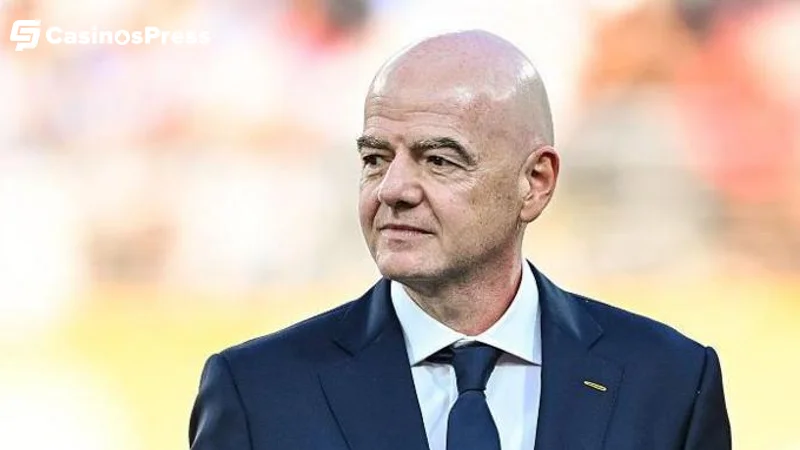
Football governance is rarely pretty, but what's unfolding between Uefa and Gianni Infantino right now is something we haven't seen in decades. A sitting Fifa president openly defying European football's governing body, a boycott threat hanging in the air, and a presidential election in March that could reshape the entire sport. This isn't just politics. This is an existential moment for football.
How We Got Here and Why It Matters
Infantino's Fifa Forward Enterprise proposal was the spark. The plan, which would have sold off stakes in the World Cup to private investors, was eventually abandoned. The problem for Infantino is that pulling the plug didn't silence the critics. Uefa made its position clear long before the U-turn, calling the scheme a 'shabby, back room, opaque deal', and losing confidence in the president entirely.
What followed was a carefully managed meeting in Rabat where Infantino gathered his own senior staff, got what looked like endorsements, and presented it to the world as though the storm had passed. Uefa didn't buy it for a second. Their response was direct. Employees whose careers depend on the president's favour backing him up changes nothing.
That's the crux of the problem. Fifa's statement of support came from people inside Infantino's own circle. The questions that actually matter, who designed the proposal, whether there was a proper tender process, and whether anyone stood to gain personally, have not been answered. Uefa knows it. We know it. And Infantino almost certainly knows it too.
The Boycott Card and What It's Really Worth
Uefa's most powerful weapon is a boycott. Pull European teams from Fifa competitions and you strip the World Cup of its most lucrative markets, its biggest TV audiences, and a huge chunk of its commercial appeal. That's real leverage.
The problem is leverage only works if you're willing to use it. And a boycott is not something you can threaten repeatedly without it losing its impact. It's a nuclear option, not a routine tactic.
The first real test comes on 5 September when the Fifa Women's U20 World Cup kicks off in Poland. Six European nations are set to participate, including England. If Uefa is serious, that fixture list becomes a deadline. If those teams show up, the boycott threat starts to look like a bluff.
Everywhere else, Infantino appears to be winning the numbers game. African football, South American associations, Concacaf and a significant chunk of Fifa's 211 member associations have either publicly backed him or refused to condemn him. To pass a vote of no confidence, Uefa needs 106 votes. Getting there looks genuinely difficult when large confederations are actively rallying behind the man they want to keep in charge.
The March Election and the Hunt for a Rival Candidate
If Uefa can't force Infantino out now, the battlefield shifts to March. The presidential election becomes the most important vote in football governance for years, and Uefa will need a credible challenger to put up against him.
Victor Montagliani, the Concacaf president, is the name being floated most seriously. The challenge is that Concacaf's public statement after the FFE withdrawal stopped well short of withdrawing support for Infantino. That's a complicated position for their president to be in if he's expected to run against the man his own confederation just defended.
Time is the enemy here for Infantino's opponents. Every week that passes gives him room to rebuild relationships. Fifa is expected to announce new funding to member associations before the end of the year, and that kind of financial carrot is exactly how you keep loyalty intact across 211 different football bodies, many of which depend on Fifa funding to survive.
For grassroots football associations in smaller nations, a $40 million offer from Infantino is not abstract politics. It's facilities, development programmes and player pathways. That reality shapes who they side with.
Where This Ends
In our view, Infantino survives the short term. He's shown no sign of resigning, his support base outside Europe remains largely intact, and Uefa doesn't yet have a clean path to removing him through institutional means.
The bigger question is whether this whole episode changes football in ways that outlast Infantino himself. The FFE proposal revealed how fragile the checks on Fifa's power actually are. If the president of world football can get this close to selling off stakes in the World Cup without meaningful scrutiny, the governance structures clearly need reform regardless of who's sitting in the top chair.
Uefa is right to push for accountability. They're just going to need more than words to get it. The Women's U20 World Cup in September is the first real moment of truth, and football fans everywhere are watching to see whether Uefa means what it says.
Editorial Note: Marcus Osei
Senior football writer and tactical analyst with 12+ years covering the Premier League, Champions League, and world football. Born in Accra, raised between London and Kuala Lumpur.