
Fifa Wants to Sell a Piece of the World Cup and Football Should Be Very Worried


Real Madrid loanee scores first career hat-trick in stunning Lyon debut
Football is heading for another power struggle, and this one could reshape the entire game.
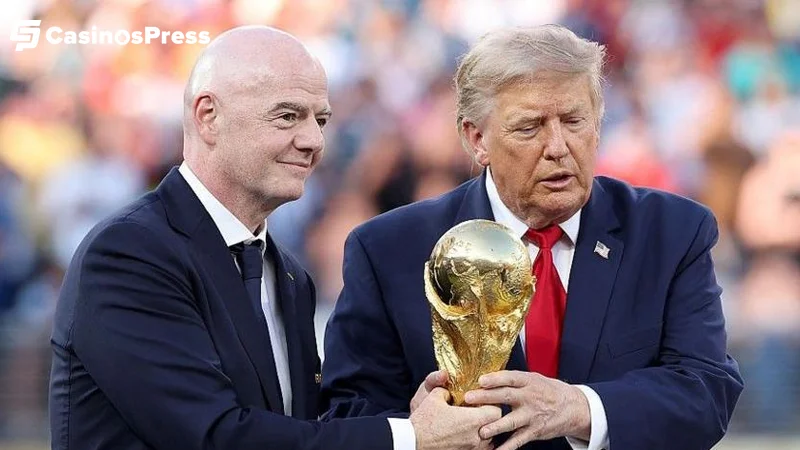
Fifa has unveiled plans to create a commercial subsidiary called Fifa Forward Enterprise, inviting private investors to take minority stakes in a venture that would consolidate its competitions and commercial operations. The World Cup sits at the heart of it. Uefa is furious. Andy Burnham called it a sell-out. The FA says it knew nothing about it. And somewhere in the middle of all this is Gianni Infantino, whose exact role in the new structure remains deliberately vague.
This is a big deal. One senior figure in English football described it privately as the most significant announcement since the European Super League proposals. That comparison should tell you everything about the stakes.
The Plan and Who Is Behind It
Fifa wants to grow its football development funding to over $10 billion and invite outside money in to help get there. The proposed lead investor group is Thrive Eternal, a venture capital firm founded by Joshua Kushner, whose family connection to the Trump administration has raised plenty of eyebrows.
The pitch to member associations is $20 million each in one-off capital to fund football development. For the English Premier League, that sum means very little. For football associations in parts of Africa, Asia or the Americas, it is genuinely transformative. That's the clever part of this plan. Fifa knows exactly who holds the votes and what they care about.
The proposal still needs approval from all 211 member nations, most likely at the Fifa Congress in Morocco in March. The numbers are not guaranteed, but the financial incentive for smaller nations is hard to argue against.
Why Uefa Is So Alarmed
Uefa's concern goes beyond principle. There's a very real commercial threat buried in this plan.
If private investors take a stake in Fifa's competition structure, those investors will need a return. That means more matches, bigger tournaments, and potentially more frequent World Cups. A 64-team World Cup played every two years isn't a fantasy anymore, it's a business case.
Uefa's Champions League and European Championship are two of the most valuable properties in world sport. A Fifa that is incentivised to grow its own tournament calendar becomes a direct competitor for the same broadcast deals, sponsorship money, and viewer attention. That's the fight Uefa is really trying to stop.
The calendar is already under serious strain. Club players are being asked to play more games than ever before. A Fifa expansion drive, backed by investors expecting returns, would squeeze things further. There's also a genuine concern that the scale of future tournaments could push them into winter windows, creating fresh conflict with domestic leagues.
The European Super League Parallel
The comparison to the Super League saga is worth sitting with. That plan collapsed within 48 hours because of fan pressure, political intervention, and the speed of the backlash. This feels different, and potentially harder to stop.
The Super League was a breakaway. This is the governing body itself inviting investors into the centre of the sport. Fifa controls the World Cup. It can change the format, the frequency, the host selection criteria. A privatised commercial arm gives outside financial interests indirect influence over those decisions, even if Fifa insists on retaining 'exclusive authority' over sporting matters. The line between commercial and sporting decisions in football is rarely as clean as governing bodies claim.
Uefa put it plainly in its statement, arguing that the soul and governance of football are not assets to trade. That's a strong position, but Uefa also knows it has its own complex relationship with commercial interests, so the moral authority here has limits on both sides.
Our Read on Where This Goes
Fifa will push this through. The votes are likely there, especially once smaller associations see the $20 million carrot on the table. The real battle won't be at the March Congress, it'll play out over the next decade as the commercial logic of investor returns starts to shape tournament decisions.
The World Cup is already the biggest sporting event on the planet. Monetising it further isn't inherently wrong. The problem is who ends up controlling the levers, and whether sporting integrity survives when the people with money involved need a financial return.
For fans, the worry is simple. More games, more rounds, more teams, less meaning in each match. The World Cup's magic has always come from scarcity and drama. Dilute it enough and you don't just lose money, you lose the thing that made it worth selling in the first place.
Editorial Note: Marcus Osei
Senior football writer and tactical analyst with 12+ years covering the Premier League, Champions League, and world football. Born in Accra, raised between London and Kuala Lumpur.