
Infantino’s World Cup Sell-Off Plan Is a Power Grab Dressed Up as Generosity


Real Madrid loanee scores first career hat-trick in stunning Lyon debut
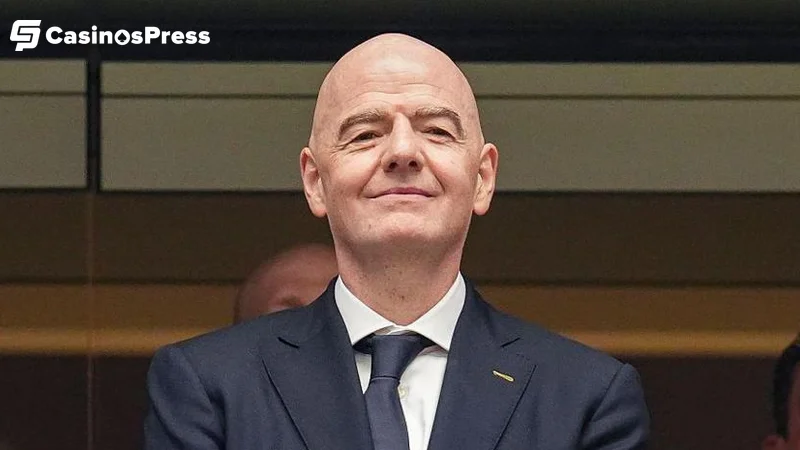
Gianni Infantino is calling it democratisation. Everyone else is calling it something far less flattering.
FIFA's push to sell off stakes in its competitions, including the World Cup, to private investors connected to Donald Trump has set off alarm bells across the football world. Fans are furious, European governing bodies are threatening to revolt, and yet Infantino seems more confident than ever. That confidence isn't misplaced, and that's the part that should worry people.
The $40 Million Carrot and Who It's Really For
The headline number Infantino keeps leading with is $40 million in funding for all FIFA member countries once the deal goes through. That sounds generous. In reality, it's a calculated move.
For the smaller football nations, the ones sitting at the bottom of the global football pyramid, $15 million is transformative money. It's more than many of them would generate over several years through their normal operations. Infantino knows this. He's been building goodwill among those nations since 2016 through exactly this kind of financial distribution, and now he's calling in the favour at scale.
This isn't democratisation. It's a loyalty programme. Vote yes, get paid, and the private investors walking in beside Infantino get to share in the future growth of the most watched sporting event on earth.
The World Cup grows in value with every cycle. Each tournament earns more than the last. If investors buy in now and stakes are sold at today's valuation, they ride that upward curve for years. FIFA, as a non-profit under Swiss law, won't pocket that growth directly. The investors will. That's the trade Infantino is brokering.
The Trump Connection Is Not a Coincidence
The investment fund at the centre of this deal is Thrive Capital, led by Josh Kushner, whose family ties to the Trump administration need no further explanation. FIFA's key commercial advisor on the proposal has donated to Trump's political campaigns. And Infantino himself has spent years cementing his personal bond with Trump, creating a FIFA Peace Prize for him, opening a FIFA office in Trump Tower, and letting the Club World Cup trophy sit in the Oval Office.
This isn't a coincidence or an optics problem. It's the strategy. Aligning FIFA with the most powerful political figure in the world gives Infantino a layer of protection and leverage that no previous FIFA president has had. If this deal goes through, Infantino won't just be football's administrator. He'll be its most powerful political operator.
That's a shift in what FIFA actually is, and it's worth sitting with that for a moment.
Why Ceferin's Anger Might Not Be Enough
UEFA is furious. Aleksander Ceferin boycotted the World Cup final. UEFA has publicly stated that FIFA's plan is designed to enrich Infantino and his associates at football's expense. The language coming from European football is as strong as we've heard in years.
The problem is that anger and action are two very different things.
Europe holds 55 of FIFA's 211 votes. That's not enough to block anything by itself. The nuclear option being floated, a European boycott of the World Cup, sounds dramatic but is almost impossible to imagine in practice. Spain and Portugal are co-hosting the 2030 tournament. Spain is lobbying hard to host the final. You don't boycott a tournament you're already invested in hosting.
UEFA could find a challenger to run against Infantino in next year's presidential election. But without enough votes to win, that becomes a symbolic protest rather than a genuine threat. Infantino's base in Africa, Asia, and the Americas is solid, bought through years of targeted financial generosity, and it's more than enough to carry a simple majority vote.
If European football leaders want to stop this, they need to move fast and move boldly. Statements and meetings won't be enough.
Our Take on Where This Ends
The World Cup sell-off plan is likely to go through. We'd be surprised if it doesn't. Infantino has the votes, the political cover, and the financial incentive structure already in place. Most of the opposition so far has been noise without a concrete mechanism to block the proposal before the September 19 deadline.
What happens next matters more than whether the vote passes. If private equity shapes the World Cup the way it has reshaped American sports and European football competitions like La Liga, the tournament will become more commercially aggressive and potentially more exclusionary over time, even if the initial funding cheques look attractive to smaller nations.
The $40 million being handed out is real money. But the investors coming in expect a far greater return, and the World Cup is the asset that funds it. Football fans might want to pay attention to who really owns the game they love before the next cycle begins.
Editorial Note: Marcus Osei
Senior football writer and tactical analyst with 12+ years covering the Premier League, Champions League, and world football. Born in Accra, raised between London and Kuala Lumpur.