
World Cup Sell-Off Blocked: Why Infantino’s Private Investor Plan Is Dead in the Water


Real Madrid loanee scores first career hat-trick in stunning Lyon debut
Gianni Infantino wanted private money in football's biggest competition. He's not getting it.
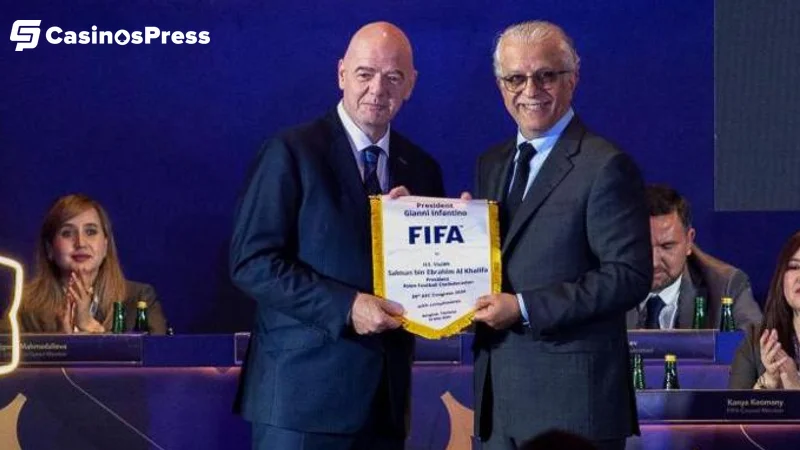
The AFC has joined Uefa and Concacaf in publicly opposing FIFA's proposal to sell stakes in its competitions to private investors, and that coalition of opposition is so wide now that the plan looks finished before it ever gets to a formal vote.
This isn't a minor spat between football administrators. This is a near-global revolt against the direction Infantino has been trying to take the sport, and the World Cup sits right at the centre of it.
What FIFA Was Actually Trying to Do
The proposal, pushed by Infantino, would have seen private investors take financial stakes in FIFA competitions, including the World Cup. The logic from FIFA's side was straightforward enough: more private capital means more revenue, and more revenue can be distributed across global football.
On paper, that argument isn't completely without merit. Plenty of leagues and competitions have brought in private equity without falling apart. Serie A explored it. La Liga went further. But the World Cup is different, and that's the part Infantino seems to have miscalculated badly.
The World Cup derives its power precisely from the fact that it belongs to everyone. It is the one competition where the full membership of global football participates, where the sport's legitimacy is on the line, and where commercial decisions carry consequences far beyond a single league or region. Attaching private investor stakes to that changes what the competition fundamentally is.
A Governance Problem as Much as a Commercial One
The AFC didn't just push back on the proposal itself. It went further, calling out FIFA for announcing the direction of a major initiative before consulting the people it would affect, including its own FIFA Council.
That's a significant accusation. It suggests Infantino has been operating as if buy-in from the confederations is an afterthought rather than a requirement. The AFC used the phrase 'sidelined' to describe how confederations, member associations and even FIFA's own governing bodies have been made to feel. That's not careful diplomatic language. That's a direct hit.
From a governance standpoint, this matters beyond the immediate debate. If FIFA's president is consistently setting policy direction before consulting stakeholders on proposals of global significance, that's a structural problem, not just a one-off disagreement.
Why This Signals Bigger Trouble for Infantino
Infantino has been one of sport's most ambitious administrators since taking over at FIFA. The expanded 48-team World Cup, the Club World Cup revamp, the push into new markets, he has never been short of big ideas. Some of them have landed. Others have created friction.
This one has created a wall. When Uefa, Concacaf and the AFC are all publicly aligned against you, and when the AFC itself is calling for an 'urgent review' of FIFA's governance framework, you're not facing a temporary setback. You're facing a fundamental challenge to how you run the organisation.
The arithmetic here is simple. Without broad confederation support, any vote on this proposal fails. The AFC's statement makes it explicit: the plan 'cannot realistically achieve the necessary broad consensus.' That's not a negotiating position. That's a door closing.
Our Read on Where This Goes
The private investor plan is effectively dead. We'd be very surprised if FIFA pushes this to a formal vote in its current form given the weight of opposition now stacked against it. Infantino may try to repackage elements of it, or find alternative routes to private capital that don't require confederation sign-off, but the headline proposal as floated is done.
The bigger story is what this means for FIFA's internal politics over the next twelve months. With the 2026 World Cup approaching in North America, Infantino needs the confederations on side. Burning bridges with Uefa, Concacaf and now the AFC simultaneously is not the way to build the unity the World Cup depends on.
Football's biggest competition belongs to the game, not to investors. That's the message being sent loudly right now, and it's one FIFA's president would do well to hear.
Editorial Note: Marcus Osei
Senior football writer and tactical analyst with 12+ years covering the Premier League, Champions League, and world football. Born in Accra, raised between London and Kuala Lumpur.