
VAR Is Going Back to Basics and Football Is Better for It


Real Madrid loanee scores first career hat-trick in stunning Lyon debut
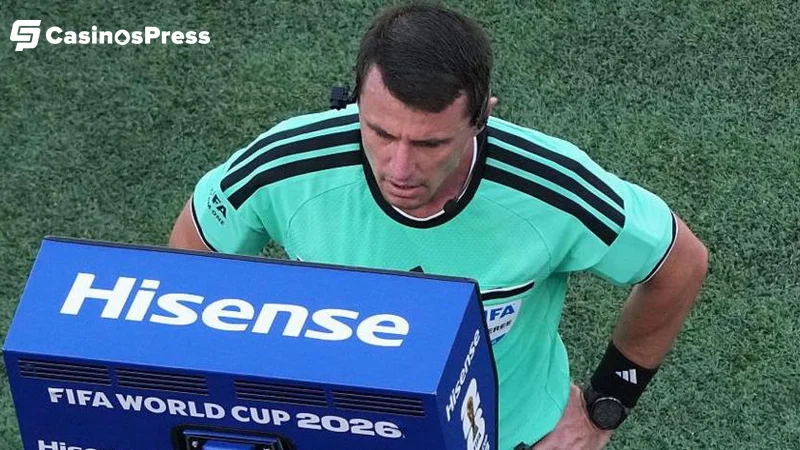
VAR is getting a reset. UEFA's refereeing bosses have made it clear that video technology should only step in when a decision is blatantly wrong, not to endlessly re-examine borderline calls that could go either way. It sounds simple enough. The reality is a bit messier.
What UEFA Actually Said and Why It Matters
Refereeing chiefs from all 55 European national associations sat down with UEFA officials and a representative from football's rulemakers to get everyone on the same page. The core message was straightforward. VAR was never meant to referee the game from a monitor. It was designed to catch clear and obvious errors, the kind that leave everyone in the stadium with their mouth open.
The phrase 'minimum interference, maximum benefit' was baked into the original laws when VAR was introduced in 2018. Somewhere along the way, that principle got lost. Reviews started dragging on for two, three, four minutes. Decisions that were never black and white were being picked apart frame by frame. UEFA wants that to stop.
For football fans and bettors alike, this matters. Lengthy reviews kill momentum, create confusion around in-play markets, and often produce decisions that still feel wrong to half the people watching.
The 'Clear and Obvious' Problem Nobody Wants to Admit
Here is the honest truth about this reset. 'Clear and obvious' is a subjective standard. It always has been and always will be.
The Luis Diaz incident in 2023 was the cleanest example of VAR failing. An onside goal was ruled out, the technology was available to fix it, and it still wasn't corrected. That was human error inside the VAR process, not a flaw in the protocol itself. So tightening the protocol doesn't guarantee those moments won't happen again.
At the same time, we've all sat through VAR checks where the original decision felt fine, the review dragged on for an eternity, and the outcome was the same call the referee made on the pitch. What was the point? If the decision wasn't blatantly wrong, it shouldn't have gone to a lengthy review in the first place. UEFA is right to push back on that culture.
The tricky part is the chain-reaction scenarios. An offside check leads to a potential handball check which leads to a foul question. If the first element could cancel out the third, you can't just ignore it. Football doesn't always give you clean, isolated incidents to assess.
The Mistaken Identity Rule and Where It Gets Complicated
One specific clarification from this meeting is worth paying attention to. The mistaken identity rule, introduced ahead of the last World Cup, allows a booking or red card to be overturned if the wrong player was punished. Breel Embolo became the first player sent off under it after VAR intervened in a situation originally involving Leandro Paredes.
The clarification now makes it explicit. VAR can only identify which player committed the offence that was penalised. It cannot be used to review whether the offence itself was correct. That is an important line to draw. Without it, the mistaken identity rule becomes a backdoor to re-examining every card shown, which takes us straight back to the problem UEFA is trying to fix.
Our Read on Where This Leaves Football
The intent here is right. Getting back to the original philosophy of VAR is the sensible move and the fact that refereeing chiefs from across Europe are aligned on it gives this more weight than a press release.
But let's be realistic. Telling officials to only intervene in blatant errors doesn't resolve the core tension. Referees will still disagree on what counts as blatant. Managers will still demand reviews. Fans will still rage at the ones that get missed and the ones that shouldn't have been checked at all.
For the betting side of football, the impact of VAR on in-play markets has always been a headache. Shorter, sharper review windows would at least reduce the uncertainty that hangs over goals and penalties while the screen in the corner of the stadium freezes on a frame nobody can properly read.
This is a step in the right direction for football. Whether the officials on the ground can actually implement it consistently is a completely different question, and if the history of VAR tells us anything, the arguments are far from over.
Editorial Note: Marcus Osei
Senior football writer and tactical analyst with 12+ years covering the Premier League, Champions League, and world football. Born in Accra, raised between London and Kuala Lumpur.