
Infantino’s Presidency Is Cracking: What a Fractured Fifa Means for the 2026 World Cup


Real Madrid loanee scores first career hat-trick in stunning Lyon debut
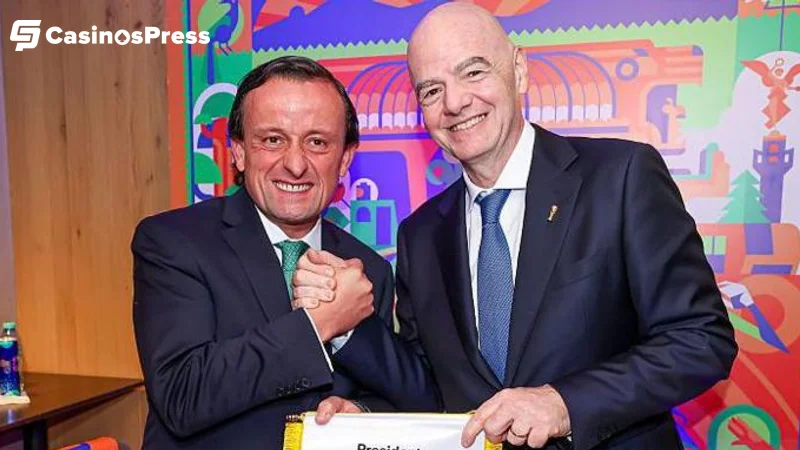
Fifa is in a mess. There's no other way to put it. Gianni Infantino, the man who has run world football for a decade, is now fighting to keep his job while the sport's biggest confederation is calling for his head and his own World Cup co-hosts are breaking ranks to back him. It's a soap opera, and it has real consequences for the game we love.
The Alliance That Doesn't Add Up
Mexico's decision to split from Concacaf is the strangest part of this whole saga. Concacaf is the regional body that governs Mexican football, so publicly contradicting its position is a bold and deliberately political move. Mexico are co-hosting the 2026 World Cup alongside the United States and Canada. The last thing they want is institutional chaos shaking the tournament just two years out.
Argentina's backing makes more sense on the surface. Conmebol, which represents South American football, has been broadly supportive of Infantino's tenure, and Argentina echoed that line by praising his 'errors' acknowledgement and framing his decade in charge as one built on transparency. That framing will raise eyebrows in Zurich and Nyon.
The truth is that backing Infantino right now is a political calculation, not a statement of principle. South America and parts of Africa see Infantino as the man who expanded the World Cup and sent development money their way. Europe sees a president who tried to quietly sell off chunks of the sport's crown jewels without telling anyone.
What the FFE Proposal Actually Tells Us
The Fifa Forward Enterprise proposal was genuinely alarming if you read past the press release language. Infantino's team was offering each of the 211 member associations a reported 40 million dollars in exchange for backing a private investment deal that would have handed outside stakeholders a share of World Cup revenues. Associations were being asked to vote yes on a deal most of them hadn't been properly briefed on.
Uefa called it a 'shabby, back room, opaque deal' and that description cuts to the heart of why this crisis has legs. It's not just about this one proposal. Multiple confederations, including Concacaf and the Asian Football Confederation, used words like 'unilateral', 'pattern of behaviour', and 'missteps'. These are not one-off criticisms. They suggest a sustained frustration with how Infantino runs Fifa's internal processes.
The English FA withdrawing its formal support and smaller nations like Wales, Albania and Croatia publicly distancing themselves shows this isn't a coordinated political hit from the big clubs or the big federations. It's broader than that.
Can the 2026 World Cup Actually Be Derailed?
This is the question football fans actually care about. Uefa has raised the possibility of a European boycott if its conditions aren't met. It says assurances that 'such attempts to disfigure the game will never be made again' have not been provided. That's a serious line to hold.
A European boycott of the 2026 World Cup would be catastrophic. Most of the world's biggest football markets, biggest clubs and most globally recognisable players sit in Uefa's orbit. A tournament without Germany, France, Spain, England and the rest of Europe would barely register as a World Cup in the eyes of the global audience.
We don't think it actually happens. The commercial machine behind the 2026 tournament is too big, and Uefa knows that walking away costs its own members dearly. But the threat is real enough to use as leverage, and right now that's exactly what it is being used as.
Our Take on Where This Ends
Infantino won't be pushed out quietly. He has Africa, much of South America and now key 2026 co-hosts on his side. Any removal would require a formal vote of Fifa's 211 members, and both Mexico and Conmebol have already said they won't recognise anything that happens outside that framework.
What this crisis has exposed is that football's global governance is a patchwork of competing interests held together by money. Infantino understood that when he came in, and he's used it to build a coalition that keeps him in power. The FFE proposal was a gamble that didn't pay off, but it won't end his presidency.
What it will do is weaken him. The 2026 World Cup is now the defining test of his final years in the role. If it goes smoothly and delivers on its commercial promises, history will probably be kind to him. If the internal fighting continues and Uefa keeps the pressure on, the cracks we're seeing right now could define his legacy in a far less flattering way.
In football, the person who controls the money usually wins. Right now, it's not entirely clear who that is.
Editorial Note: Marcus Osei
Senior football writer and tactical analyst with 12+ years covering the Premier League, Champions League, and world football. Born in Accra, raised between London and Kuala Lumpur.