
Mourinho at United in 2013: The Decision That Changed Football History


Real Madrid loanee scores first career hat-trick in stunning Lyon debut
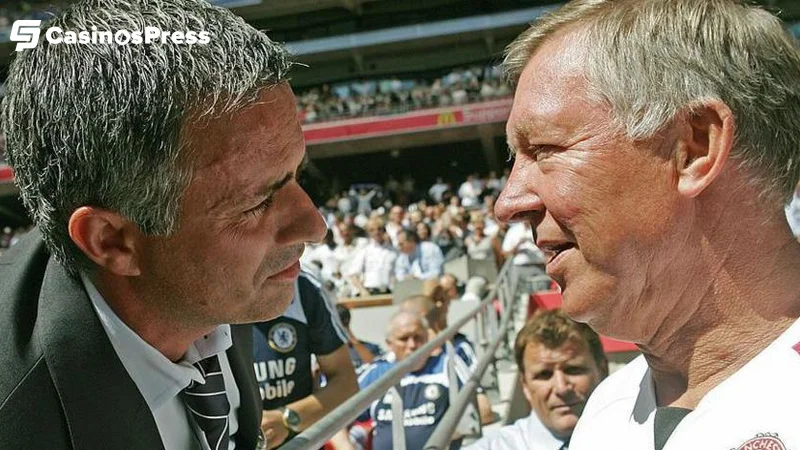
Jose Mourinho has finally confirmed what football fans have whispered about for over a decade. He agreed to replace Sir Alex Ferguson at Manchester United in 2013, and then pulled out at the last minute to return to Chelsea instead. It's one of the great what-if stories in modern football, and now we've got it straight from the horse's mouth.
The Phone Call That Changed Everything
Ferguson himself thought it was done. He sat Mourinho down, explained the situation, and walked away convinced his successor was in place. Then, within hours, everything flipped. Mourinho rang him that night, apparently in tears, and told him he couldn't break his word to Chelsea.
This wasn't a cold business decision. By Mourinho's own admission, it was emotional. After the chaos of his final year at Real Madrid, where dressing room relationships had completely collapsed, he needed to feel wanted. Chelsea gave him that. Old Trafford, for all its prestige, couldn't compete with that feeling in the moment.
Ferguson said he was disappointed but understood the reasoning. That tells you something. These are two men who live by loyalty and handshakes, and even Ferguson couldn't argue with someone honouring their word.
What United Got Instead, and What They Missed
United went with David Moyes, and we all know how that ended. Then came Louis van Gaal. Then, in a twist of fate, Mourinho finally arrived at Old Trafford in 2016 anyway, three years later than planned.
He won the League Cup and Europa League during his time there, but never came close to a title challenge. The football was often laboured, the dressing room grew fractious, and he was sacked in December 2018. The window had closed. The version of Mourinho who might have seamlessly continued Ferguson's legacy was gone, replaced by a man carrying the scars of too many fallouts and too many battles.
At Chelsea in that 2013 return, Mourinho was brilliant. A third Premier League title followed, and for a while he looked like the best manager in the world again. The timing was everything, and he read it correctly.
The Real Madrid Fallout and the Casillas War
You can't understand the 2013 decision without understanding what happened at Real Madrid. Mourinho's third season at the Bernabeu was a disaster. They finished 15 points behind Barcelona. The dressing room was fractured. His treatment of club legend Iker Casillas drove a wedge between him and key players including Cristiano Ronaldo and Sergio Ramos.
Casillas has now spoken openly about the relationship being cold and reaching a breaking point. Sami Khedira was even more direct, saying the locker room became a nightmare once Mourinho benched the club's most beloved player and started criticising him publicly.
Mourinho's defence is that Casillas had a bad attitude from day one, demanding extra holidays, later training times and the removal of pre-match hotels. There's probably truth on both sides, but the result was the same. When Mourinho left Madrid, he left damaged. Football had beaten him up, and he needed somewhere he felt at home.
Our Take: The Right Call, the Wrong Legacy
With the benefit of hindsight, Mourinho made the right call for himself in 2013 but it's impossible not to wonder what a fresh, motivated Mourinho could have done at United in that exact window.
He was coming off a La Liga record points haul. He had won everything in club football. He was in his prime as a manager. United still had quality in the squad. The infrastructure was there. If he had walked into Old Trafford that summer, full of hunger and with something to prove, the Premier League story of the last decade might look very different.
Instead, football got its greatest what-if. A phone call in the night, a man in tears, and a decision made with the heart rather than the head. Mourinho admits it himself. In football, those are usually the decisions that define careers, one way or the other.
Editorial Note: Marcus Osei
Senior football writer and tactical analyst with 12+ years covering the Premier League, Champions League, and world football. Born in Accra, raised between London and Kuala Lumpur.