
Paredes Gets 10 Games, Argentina Get Fined and Shamed: The Full Fallout from the World Cup Final


Real Madrid loanee scores first career hat-trick in stunning Lyon debut
Argentina won the World Cup in 2022. In 2026, they lost it, then lost the plot completely. The fallout from the World Cup final defeat to Spain has been severe, and FIFA's disciplinary committee has made sure everyone knows it.
What Paredes Actually Did
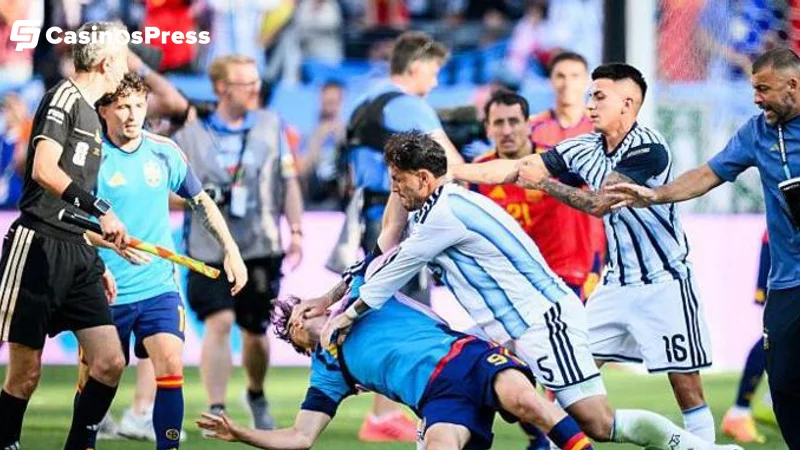
Leandro Paredes didn't just get involved in a bit of pushing and shoving. He grabbed Eric Garcia by the throat, wrestled Gavi to the ground and appeared to strike him in the face. That's not frustration boiling over, that's a full breakdown of discipline from an experienced international midfielder who should know better.
A 10-match international ban is one of the heaviest suspensions FIFA has handed out in recent memory for on-field conduct. Nahuel Molina, who appeared to punch Spain's Rodri mid-celebration, gets seven matches. Both players will also pay $90,000 fines each. Roberto Ayala, a coaching staff member, was caught striking Dani Olmo in the face and picks up a three-match ban on top of his own fine.
These aren't small punishments. FIFA clearly wanted to send a message.
The AFA's Bigger Problem
Beyond the individual bans, the Argentine Football Association has been fined $321,000 for multiple breaches. Those include team misconduct, discriminatory chants from supporters, and what FIFA described as using a sporting event for demonstrations of a non-sporting nature.
That last one relates to the banner several Argentina players held up after beating England in the semi-final, which claimed Argentine sovereignty over the Falkland Islands. The timing, broadcast to an estimated 1.5 billion people worldwide, was deliberate and provocative, and FIFA was never going to ignore it.
One effective home match will be played at 50% capacity as an additional sanction, though a second game of that restriction is suspended. $100,000 of the fine must go towards an anti-discrimination programme. Another $100,000 is suspended, which keeps pressure on the AFA to behave going forward.
The AFA has confirmed it will appeal, and if that fails, it will go to the Court of Arbitration for Sport. Given the video evidence involved, we wouldn't back them to get much reduced.
A World Cup Final Remembered for the Wrong Reasons
Spain won the 2026 World Cup final 1-0 in New York. It should have been the defining image of the tournament. Instead, the post-match scenes at the New York New Jersey Stadium dragged the whole occasion into controversy.
Argentina came into this World Cup as defending champions, one of the most admired sides in international football, built around a golden generation. The way some of their players and staff conducted themselves after the final whistle showed another side entirely. Gavi himself said he didn't think Paredes deserved punishment, which is a generous take, though Gavi still picks up a one-match ban and a $30,000 fine for his own involvement.
The real damage here isn't financial. Argentina's reputation, carefully rebuilt under Lionel Scaloni through years of strong football and the 2022 triumph in Qatar, has taken a serious hit. The Falklands banner, the post-match violence, the discriminatory chanting from sections of their support, it all adds up to a picture FIFA clearly felt needed addressing firmly.
Our Read on What Comes Next
From a football standpoint, the suspensions hurt Argentina more than the fines. Paredes missing 10 internationals removes a key midfielder from their setup for a significant stretch. Molina losing seven games limits their right-back options. Neither player is getting any younger, and these bans will likely define the final chapters of their international careers in the worst possible way.
If Argentina do manage to get the bans reduced at CAS, it won't change the narrative. The scenes happened, the footage exists, and the World Cup final will carry an asterisk of shame in Argentine football history alongside Spain's victory.
FIFA came down hard here, and honestly, it's difficult to argue they were wrong to do so. You cannot have players attacking opponents and staff punching rivals in the face at the biggest sporting event on the planet and expect to walk away unpunished. Argentina's players and officials crossed a line, and the consequences are significant. Appealing feels more like a procedural reflex than a genuine belief they'll get off lightly.
Editorial Note: Marcus Osei
Senior football writer and tactical analyst with 12+ years covering the Premier League, Champions League, and world football. Born in Accra, raised between London and Kuala Lumpur.