
South Korea’s Football Crisis Goes Beyond Bad Results: The Referee Scandal That Changes Everything


Real Madrid loanee scores first career hat-trick in stunning Lyon debut
South Korea football is in crisis. Not the kind where a team loses a few games and fans grumble online. The real kind, where the entire structure of the sport in a country looks rotten from the inside out.
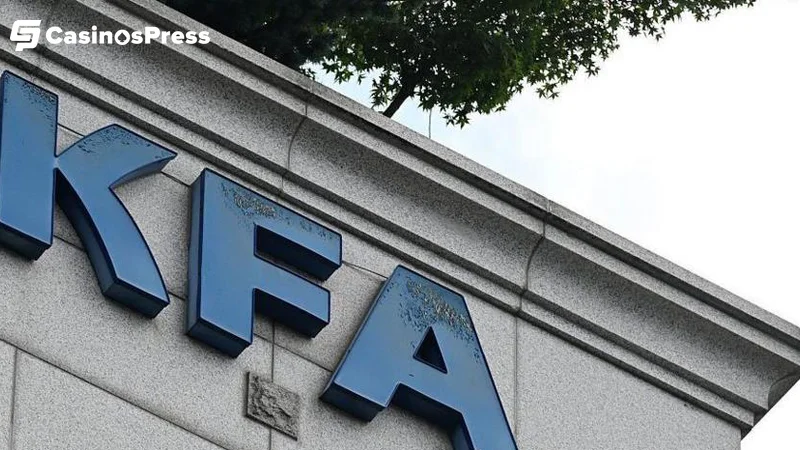
The Korea Football Association has now issued a public apology covering everything from their 2026 World Cup group stage exit to a decade-old scandal involving payments for sexual favours made to foreign referees. And when you start pulling on those threads, the whole thing unravels fast.
The Referee Scandal Is the Story Nobody Wanted to Tell
A government ministry report compiled all the way back in 2016 only became public last week. That alone should tell you something.
The findings were damning. KFA credit cards were used to pay for sexual entertainment at massage parlours for foreign referees visiting South Korea in the early 2010s. The expenses were disguised as food, drink or standard massages. One official apparently brushed it off with the line that 'it was common practice back in those days', which is the kind of statement that answers nothing and raises everything.
Here is where it gets really serious. The referees involved are said to have officiated South Korea qualifying matches for both the 2014 World Cup and the 2012 London Olympics. South Korea qualified for both. We are not saying the results were fixed. But we are saying that when you bribe the people responsible for enforcing the rules in your qualification campaign, and then qualify, you have a serious credibility problem that no apology fully addresses.
Japanese media are reporting that their own football association is now investigating whether some of its referees were involved. If that investigation gains traction, this stops being a South Korea story and becomes a wider Asian football scandal.
A Summer of Collapse at the KFA
The referee scandal is just one layer of a very messy situation. South Korea went to the 2026 World Cup and failed to get out of a group containing Mexico, the Czech Republic and South Africa. It was the kind of exit that ends careers, and it did exactly that.
Manager Hong Myung-bo resigned. KFA president Chung Mong-gyu resigned. And last week, police raided KFA headquarters as part of an investigation into the alleged obstruction of business surrounding Hong's original appointment.
The issue there is that the KFA apparently ran a lengthy hiring process, interviewed multiple foreign coaches, and then scrapped the whole thing to hand the job to Hong following a brief, informal meeting. That process is now under criminal scrutiny. And according to Korean media, police are open to widening the investigation to include the sexual favours allegations, with a statute of limitations of 15 years meaning events from the early 2010s could still be prosecutable.
South Korea football's summer has been nothing short of a full institutional breakdown.
What Park Ji-sung Walking Into This Actually Means
The government has not walked away from the sport. Instead, they have handed Park Ji-sung, the former Manchester United and national team captain, responsibility for a new football innovation committee. Park has already come out swinging, recommending that the KFA presidential electorate be expanded from roughly 200 officials and insiders to around 20,000 people, including semi-professionals.
That is a dramatic structural shift and it tells you exactly what Park thinks the problem is. When 200 people control who runs a national football association, you get a closed circle where bad practices get buried, inconvenient reports sit on shelves for eight years, and hiring decisions get made over informal chats rather than transparent processes.
Whether Park can actually drive that change depends on who ends up winning the presidential election the KFA will hold before the end of the year. The head coach role is also still vacant. So South Korea football heads into this period of supposed reform with no leader on the pitch and a cloud over its entire recent competitive history.
Our Read on Where This Is Going
The KFA apology, as apologies go, was oddly structured. It bundled a World Cup failure in with a sexual bribery scandal and framed them both as sources of 'disappointment'. One is a football problem. The other is a potential criminal and sporting integrity matter. Treating them the same way suggests the association still does not fully grasp the gravity of what the referee scandal represents.
For South Korea football to genuinely rebuild, the investigation needs to run its full course, the police inquiry needs to be allowed to expand if the evidence points that way, and the governance reform Park Ji-sung is pushing for needs to actually happen rather than getting watered down by the same insiders who benefited from the old system.
The talent in South Korean football is not the issue. The structure around it is. Until that is fixed, results and reputation will both keep suffering.
Editorial Note: Marcus Osei
Senior football writer and tactical analyst with 12+ years covering the Premier League, Champions League, and world football. Born in Accra, raised between London and Kuala Lumpur.