
Man City Found Guilty: What £920m of Hidden Money Actually Means for the Premier League


Real Madrid loanee scores first career hat-trick in stunning Lyon debut
This is the biggest verdict in English football history. Manchester City have been found guilty of breaching Premier League financial rules across nine seasons, with an independent commission ruling that the club disguised more than £920m in funding to pass financial fair play checks. The detail in the ruling is staggering, and for anyone who follows this sport closely, it raises serious questions about the integrity of the competition itself.
We've read through the commission's findings and pulled out what actually matters.
The Scale of the Con
The numbers alone should stop you in your tracks. Between the 2009-10 season and 2017-18, Man City reported £949.94m in commercial sponsorship income. According to the ruling, only £119.25m of that was genuine base fee income from sponsors. The remaining £830.69m came from the club's own owners, Abu Dhabi United Group, quietly topping up deals behind the scenes.
This is what the commission called the 'Disguised Funding Scheme'. Sponsorship deals were split into two parts: a base fee paid by sponsors, and a 'tagged sum' paid by the owners. Regulators, auditors, and Uefa were all given the impression that City's commercial revenues were genuinely that high. They weren't. Not even close.
On top of that, a further £90m was hidden through separate arrangements, including the Fordham Arrangement, a deal described in the ruling as 'little more than a front', and a series of payments made to players and managers through third parties to keep wages off the books.
The total financial misrepresentation across all categories comes to £920.68m.
Nine Seasons, Repeated Deception
What makes this worse than a one-off mistake is the repetition. This wasn't a single bad decision or a grey area misunderstood. The ruling shows the scheme was 'tweaked' over multiple seasons specifically to 'assist with continued concealment' and avoid difficult questions.
One example that stands out involves May 2013. With less than a week left in the financial year, City found themselves £9.9m short of complying with Uefa's financial fair play rules. Within days, without even approaching sponsors, a set of modified agreements was generated to plug the gap. Bonuses were recorded for events that had already happened. The shortfall disappeared on paper.
That's not an accident. That's a deliberate workaround to pass a compliance check.
The commission also found that important witnesses 'lied knowingly' during the inquiry, that certain individuals provided evidence 'they knew to be untrue', and that Man City made 'concerted efforts to stop and frustrate' the investigation. The club were found guilty of failing to act with 'utmost good faith'.
What Man City Won and What It Actually Cost the Game
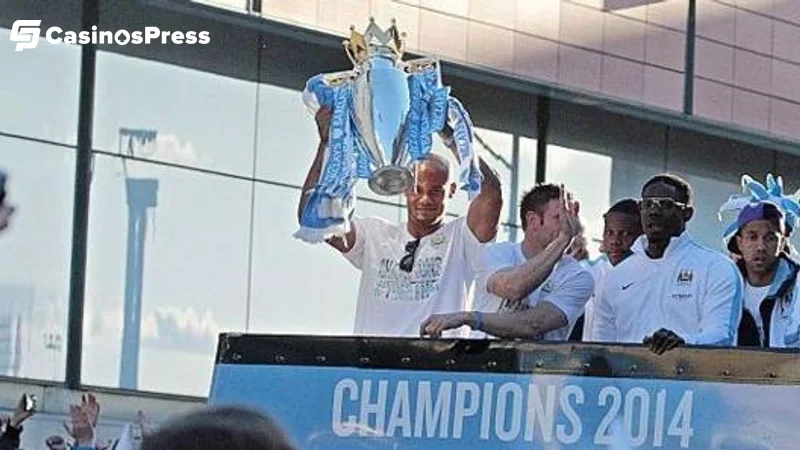
This is where the conversation gets uncomfortable for Premier League supporters of every club. During the nine seasons the scheme ran, Man City won the Premier League title in 2011-12, 2013-14, 2017-18, and went on to build the dominant squad that has won four consecutive titles in recent years. Players were brought in, wages were paid, FFP limits were passed, all built on a financial picture that the ruling confirms was false.
The clubs they competed with in that period played by the rules. Some were fighting relegation battles partly because they couldn't afford to spend what City appeared to be spending legitimately. The competitive distortion isn't theoretical. It's real, and it spans nearly a decade.
For anyone who has followed Man City closely over this era, whether as a supporter, a rival fan, or a punter who backed them in title markets, this ruling reframes what happened on the pitch. We're not saying City didn't have good players or a good manager. They clearly did. But financial fair play rules exist to create a level playing field, and the commission has now confirmed that playing field wasn't level.
What Comes Next and Where the Pressure Lands
The penalty phase is still to come, and this is where things get genuinely uncertain. A points deduction is possible. Expulsion from the competition has been discussed. Financial penalties have precedent but feel inadequate given the scale of what's been found here.
The new Independent Football Regulator also has the power to look at the honesty and integrity of directors and owners. Given that the ruling explicitly states certain individuals provided knowingly false evidence, that avenue is likely to be explored. Names are currently redacted but may be released when the full written reasons are published.
For punters, the practical impact is this: Man City's future in Premier League title markets now carries genuine regulatory risk that it didn't before. Whether that means a points deduction this season, an appeal that drags into next, or something more severe, the uncertainty is real. Anyone building an accumulator around City's top-four finish or title odds should factor in that this story is far from over.
The commission used the word 'sham' eight times in its ruling. That word doesn't land lightly. And the Premier League now has to decide what nine seasons of deception at this scale is actually worth in terms of punishment. Get that decision wrong, and the whole system looks broken.
Editorial Note: Marcus Osei
Senior football writer and tactical analyst with 12+ years covering the Premier League, Champions League, and world football. Born in Accra, raised between London and Kuala Lumpur.