
Pochettino Is Right: The Man City Verdict Exposes a Premier League That Policed Some Clubs and Ignored Others


Real Madrid loanee scores first career hat-trick in stunning Lyon debut
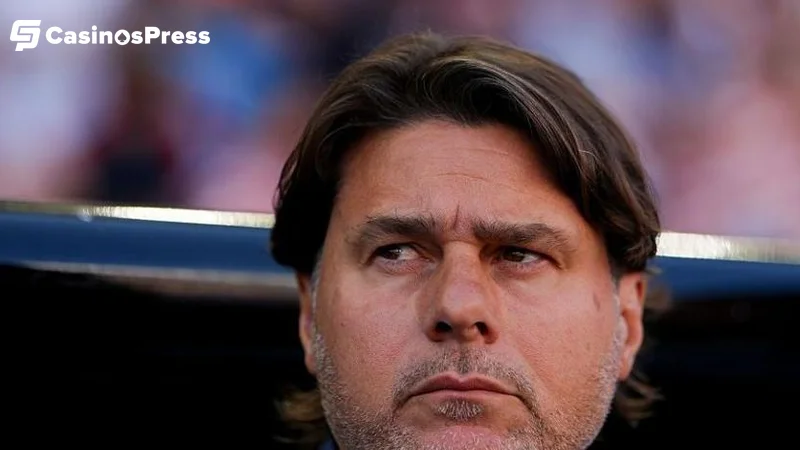
Mauricio Pochettino doesn't do grandstanding. So when he calls the Man City era a 'period of deception', that's not a former manager rattling a tin for attention. That's someone who was in the trenches, building clubs on restricted budgets, watching rivals spend freely, and now putting words to something millions of football fans have felt for years.
With 114 of 115 charges upheld against Manchester City by an independent panel, the Premier League is facing its biggest integrity crisis in modern history. Sanctions are still to come, and City are expected to appeal. But the verdict alone has cracked something open that can't easily be sealed back up.
The 18 Months That Still Sting
Pochettino's most striking point isn't about Chelsea or titles. It's the 18-month transfer embargo Tottenham served while building their new stadium, all to comply with Premier League financial regulations.
Think about that for a moment. Spurs were scraping into Champions League semi-finals, finishing in the top four every season, competing against clubs who were allegedly inflating their commercial revenues and misreporting financial data. Tottenham were being held to the letter of the law while others, if the charges are to be believed, were operating with no regard for it.
That is not a minor administrative oversight. That's a competitive disadvantage stretching across nearly a decade of football. Transfer windows missed, targets lost, squad depth sacrificed. All in the name of compliance with rules that apparently weren't being enforced equally.
What the Verdict Actually Means for Football
The charges against City span from the 2009-10 season to 2017-18, a period that covered multiple title races, Champions League campaigns and the construction of what was painted as the blueprint for modern club football. If the findings hold through any appeal, every table finish, every trophy, every points gap during that time looks different.
Pochettino asks the right question when he says 'where were the controls?' The Premier League's investigation took four years. The hearing itself ran for around 12 weeks. These are not small-scale findings. The scale and the timeline suggest this wasn't a clerical error or a grey area in accounting. The panel found systematic rule-breaking across almost every charge brought.
Other Premier League clubs are now reportedly seeking legal advice over possible compensation claims. That is a story in itself. If clubs can demonstrate that City's conduct directly cost them prize money, commercial revenue or competition places, the financial fallout could rival anything the panel decides to impose on City themselves.
What a Fair Punishment Actually Looks Like
This is where it gets genuinely difficult. Pochettino is right that you can't turn back time. You can't give Tottenham those 18 months of transfer activity back. You can't hand Leicester their title if it turns out City's spending during certain seasons distorted the table. You can't make fans of clubs who were relegated or missed Europe whole again.
An economic punishment alone doesn't cut it. A points deduction in the current season punishes this squad for what a previous regime did. Relegation would be seismic but arguably the most logical sporting consequence if the breaches are found to have provided a sustained competitive advantage. Stripping titles is complex but not without precedent in world sport.
We think the panel will need to go further than a fine. Anything less would confirm what Pochettino is suggesting, that the Premier League applies its rules selectively, and that the only real punishment for breaking them is an investigation that takes the best part of a decade to conclude.
Our Take
The betting angle here isn't about next weekend's fixtures. It's about the Premier League's credibility as a competition and what that means for how the game is perceived going forward.
If you were building a football accumulator during the 2012 to 2018 period and the odds were shaped by a title race that wasn't being played on a level field, that matters. The integrity of outcomes underpins everything in football, from match betting to futures markets to European qualification odds.
Pochettino lived through it at Southampton, at Tottenham and at Chelsea. He's not speaking hypothetically. He's describing a period where the rules existed on paper for some clubs and apparently didn't for others.
Football doesn't have a clean way out of this one. Whatever comes next, the verdict alone has already changed how we look back at one of the Premier League's most celebrated eras.
Editorial Note: Marcus Osei
Senior football writer and tactical analyst with 12+ years covering the Premier League, Champions League, and world football. Born in Accra, raised between London and Kuala Lumpur.