
Three Weeks, No Games: How Premier League and Championship Clubs Are Handling the Longest International Break in Years


Real Madrid loanee scores first career hat-trick in stunning Lyon debut
Three weeks. No competitive football. For clubs, players and bettors alike, this international break is unlike anything we've seen before.
For the first time, the Premier League and Championship have come to a complete stop for three full weeks, merging what used to be two separate September and October windows into one extended break. On paper, club football actually gets a week back over the course of the season. In practice, it creates a situation nobody has had to navigate quite like this before.
And if you're someone who bets on football, the implications for the first round of fixtures after the break are bigger than you might think.
Rust, Rhythm and the Return Problem
Fitness and sharpness matter enormously in football. Players missing two or three weeks of competitive action can come back either refreshed or ring-rusty, and that uncertainty creates real value in the betting markets.
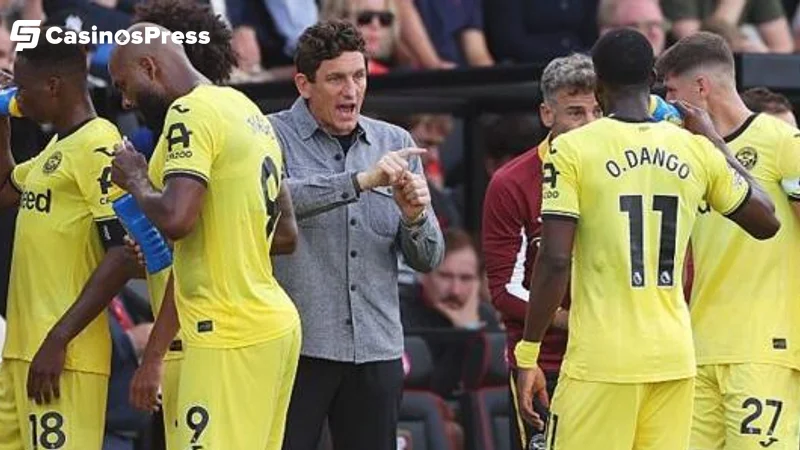
Brentford are one of the clubs giving non-travelling players a full week off before reconvening on 26 September. That's a long time away from the training pitch for fringe players, even with individual programmes to follow. They're also lining up a behind-closed-doors friendly on the weekend of 3 October, which could hand minutes to returning injury absentees like Nathan Collins and Sepp van den Berg.
When those players come back into contention, the temptation is to back them straight away. Our advice is to be cautious. A behind-closed-doors friendly against mixed opposition is a very different animal to a Premier League fixture. Players can look sharp in training and still take a couple of competitive games to truly hit their stride.
What the Break Means for Specific Fixtures
Not all clubs are using this break in the same way, and that matters when you're looking at the first gameweek back.
Nottingham Forest's manager flagged that he'll have no more than three days to prepare his squad for a home fixture against Manchester City on 11 October. City, by contrast, tend to have a more structured return timeline given the resources available to them. A short preparation window for the home side is worth factoring in, especially in a match where City will be favoured regardless.
Aston Villa are going a completely different route, travelling to Sevilla for a prestige friendly on 2 October. Unai Emery knows the club well, having won the Europa League there three times running. It's a meaningful warm-up game in terms of match sharpness, but long-haul travel and an emotionally charged atmosphere can take something out of a squad too. Villa's form on return from the break is worth monitoring before committing to them in accumulators.
Championship Clubs Could Be the Smarter Bet
Here's an angle that doesn't get enough attention. Championship clubs, with fewer internationals and more players staying behind, might actually benefit from this break more than top-flight sides.
Take Blackburn Rovers. Tony Mowbray had more than 10 players out injured in the opening weeks. This break gives him time to ease those players back, properly work on shape and tactics, and have a squad that genuinely looks different to the one that started the season. Clubs in that position could be overpriced in their first fixtures back, particularly if the markets haven't accounted for the squad depth returning.
In the Championship, fitness is everything. A team coming out of this break with key players back from injury and a week of proper double sessions behind them can swing a fixture. Keep an eye on team news in the days before the resumption.
Our Call on Betting the Restart
The smart money after a break like this is usually on cautious, defensive football in the opening exchanges of the first round of games. Players are not match-sharp. Managers are cautious. Neither side wants to blow it in the first game back.
That points us toward under 2.5 goals markets in fixtures where both teams have had disrupted preparations. It also points toward backing form coming into the break rather than chasing teams who looked good before a long lay-off.
The clubs who used this window wisely, be it through friendlies, injury recoveries, or intensive tactical work, will show that in the results. The clubs who gave everyone a holiday and hoped for the best might take a week or two to click again.
In football betting, the international break is often where edges are found. This time, with three weeks of disruption across the board, that's more true than ever.
Editorial Note: Marcus Osei
Senior football writer and tactical analyst with 12+ years covering the Premier League, Champions League, and world football. Born in Accra, raised between London and Kuala Lumpur.