
Ferguson’s Brain Haemorrhage, His Greatest Calls and What They Tell Us About the Man United Years


Real Madrid loanee scores first career hat-trick in stunning Lyon debut
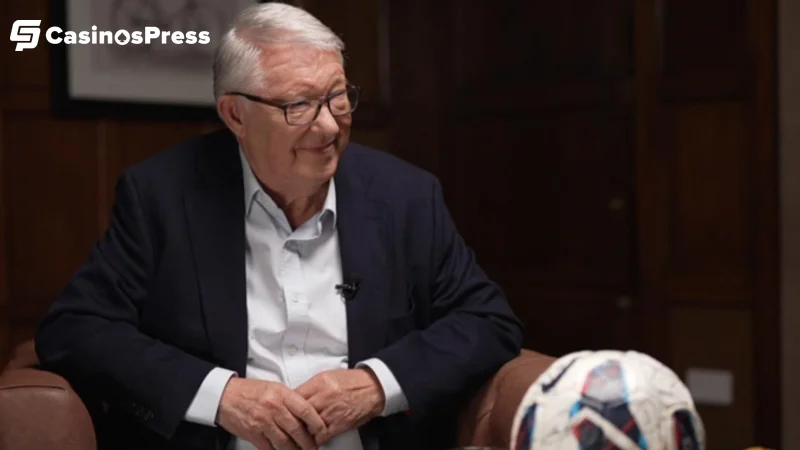
Sir Alex Ferguson has never been someone who plays it safe. Not on the training pitch, not in the transfer market, not in life. And a new interview ahead of his book release is a reminder of just how many defining moments, brave decisions and near-misses went into building the most successful chapter in Man Utd history.
At nearly 85, Ferguson is reflective but still sharp. Still willing to take a position. Still the bloke who would sell a fan favourite at 7.5 million quid and not lose a wink of sleep over it.
The Haemorrhage and What It Really Took to Come Back
This is where the story starts for most people reading right now, and rightly so. In May 2018, Ferguson suffered a brain haemorrhage. He lost his voice. His grandsons came to see him and he couldn't speak to them. A therapist helped him recover by getting him to write down names of birds, animals and rivers.
Four months later, he walked back into Old Trafford. He was terrified. Not of the game, not of the football, but of what the reception might be. He needn't have worried. The entire ground gave him a standing ovation. His wife was nearly in tears.
That moment matters beyond sentiment. It tells you what Ferguson means to Man Utd supporters. Six years after retirement, after a brain haemorrhage, after everything, the place still belongs to him in a way it has never quite belonged to anyone since.
The Decisions That Looked Mad at the Time
Selling Paul Ince in the summer of 1995 was one of them. Fans were furious. Letters flooded in telling Ferguson he would regret it, that every Red was disgusted with him. The fee went from seven million to seven and a half million and Ferguson just said do it.
Why? Because he could see Paul Scholes waiting. Because he had that feeling, the one great managers get, that Ince had started believing his own reputation more than the work in front of him.
Incidentally, Ferguson also sent a young David Beckham out on loan to Preston around the same time, and Beckham genuinely thought he was being pushed out. He wasn't. Ferguson could simply see that Beckham needed game time to grow into his body and his game.
By the end of that same 1995-96 season, Man Utd had won the league and FA Cup double. Alan Hansen's famous line about not winning anything with kids aged terribly.
This is the bit that matters for anyone who follows football with a betting eye. Great managers don't just react to the squad they have. They shape the squad they want three seasons from now. Ferguson was always thinking two or three moves ahead, and that is exactly why Man Utd were so consistently bankable during his era.
The Govan Kid Who Nearly Moved to Canada
Here's a detail that doesn't get nearly enough airtime. A young Ferguson, stuck in the reserves at St Johnstone and not enjoying a minute of it, filled out all the forms to emigrate to Canada. He phoned his aunt to arrange a sponsor. He didn't tell his parents.
The next day, St Johnstone turned up at Ibrox short on players due to a flu outbreak. Ferguson got his start, scored a hat-trick against Rangers and never looked back.
One day of circumstances changed everything. Man Utd and their 13 Premier League titles, two Champions League trophies, five FA Cups and everything else that followed, all of it rested on a flu bug hitting a St Johnstone squad at the right moment.
Ferguson's own takeaway from that story is worth hearing. He says young people should never miss the biggest opportunity in their life, but more than that, they need to recognise it when it arrives. That is a harder skill than most people give credit for.
What His Legacy Actually Means for Man Utd Now
Man Utd are in a different world right now. The club is rebuilding, uncertain, nowhere near the force they were under Ferguson. And his interview, warm and funny and honest as it is, only sharpens the contrast.
The Ferguson era produced a Man Utd side that any bettor would back to perform in big moments. They had mental toughness, squad depth and a manager who made bold calls that held up over time. That version of Man Utd feels a very long way away.
Ferguson is feeling good despite small injuries, as he puts it. He is nearly 85, writing books and appearing on television, and he still carries more authority than almost anyone currently working in football. That tells you everything about how rare he was, and how much Man Utd are still searching for something close to what he gave them.
Editorial Note: Marcus Osei
Senior football writer and tactical analyst with 12+ years covering the Premier League, Champions League, and world football. Born in Accra, raised between London and Kuala Lumpur.