
Hallgrimsson’s Genocide Comment Has Blown Up — But Ireland Still Have to Play Israel


Real Madrid loanee scores first career hat-trick in stunning Lyon debut
This fixture was always going to be loaded. Now it's a full-blown international incident before a ball has been kicked.
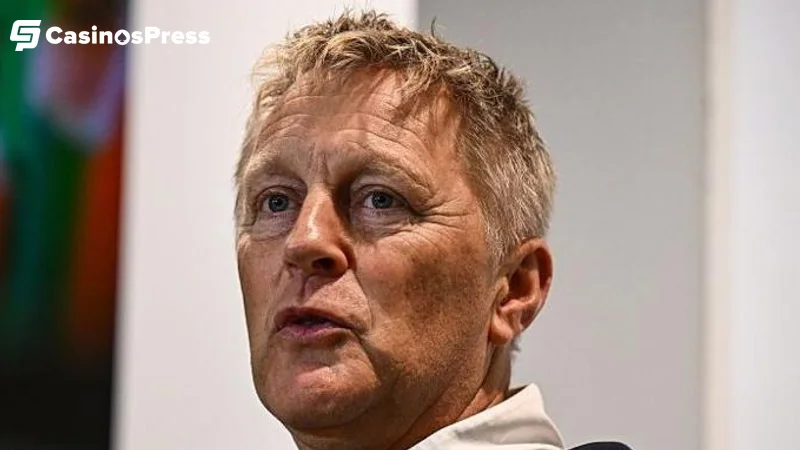
Republic of Ireland Men head coach Heimir Hallgrimsson made waves last week when he described the upcoming Nations League clashes against Israel as playing 'against genocide, not with genocide.' The Israel FA fired back hard on social media, accusing Hallgrimsson of 'ignorance, hypocrisy and stupidity' in a pointed and very public response. The Football Association of Ireland has stayed silent. Protesters turned up at the Irish team hotel. Over 160 Irish sportspeople have signed an open letter calling for a boycott. And somehow, the games are still scheduled to go ahead.
Let's break down what's actually happening and what any of this means for the football.
Why the Boycott Isn't Going to Happen
The FAI already settled this question back in July. Their General Assembly voted 75 to 32 to proceed with the fixtures. The financial stakes were made explicit too, with the association warning that boycotting would cost them over ten million euros and cause lasting structural damage to Irish football.
That vote didn't end the conversation, it just moved it to the streets and social media. The open letter from the Irish Sport for Palestine Group carries some serious signatures, from Olympians to GAA icons to former internationals. The moral weight behind it is real. But the games are being played in Hungary and Serbia, UEFA hasn't moved to intervene, and the FAI has made its call.
Unless a player refuses to travel, these games are happening.
What Hallgrimsson's Comments Actually Tell Us
He didn't bury his opinion. When asked about keeping players focused, he made a political statement that no FAI press officer would have signed off on. That tells you something about where his head is at.
Hallgrimsson also said he spoke individually to every player in his squad and that 'none of us feel comfortable playing in these games.' That's a coaching staff and squad walking into a major fixture under genuine emotional and political pressure, not just the usual pre-match noise.
Can a squad perform at their best when the manager has publicly stated his discomfort and the build-up has been dominated by protest and political controversy? That's the real question for anyone looking at Republic of Ireland Men in these games from a betting perspective.
The Football Context Gets Forgotten in All This
Strip away the politics for a second and you've got a Republic of Ireland side still searching for their identity under Hallgrimsson. Since their painful penalty shootout exit to the Czech Republic in the World Cup play-off semi-final back in March, they've played four friendlies, two wins against Grenada and Qatar, two draws against North Macedonia and Canada. Nothing that tells you a great deal.
Israel, meanwhile, are playing their home games in Hungary and Serbia because of the ongoing security situation. They're essentially a team without a home ground, playing in unfamiliar neutral venues, with their own set of pressures entirely separate from what's happening off the pitch.
Neither side is coming into this in ideal circumstances. Both camps carry distractions that go beyond football. That makes form analysis difficult and makes both matches genuinely unpredictable.
Our Take on These Fixtures
We're not going to pretend this is a normal betting market. The off-field noise is so loud that predicting how either squad will perform emotionally is nearly impossible. A manager who's said publicly he doesn't want to be there, a squad consulted individually about their willingness to play, protesters outside the hotel, and an opponent who just went nuclear on social media. This is not the environment in which clean, clinical football gets played.
For Republic of Ireland Men, there's an argument that the squad could channel all of this into a focused, professional performance just to get through it and move on. There's an equally strong argument that the distraction and discomfort will show. We lean towards cautious selections in these games, backing tight, low-scoring affairs rather than expecting either side to produce their best football.
If you're building an accumulator around the Nations League, these two fixtures are the ones to either avoid or treat as low-scoring draws with heavy caution. The football will be secondary to everything else happening around it, and that usually means neither side runs away with it.
Editorial Note: Marcus Osei
Senior football writer and tactical analyst with 12+ years covering the Premier League, Champions League, and world football. Born in Accra, raised between London and Kuala Lumpur.