
Long-Distance Managers: The Hidden Routines Behind Football’s Most Demanding Job


Real Madrid loanee scores first career hat-trick in stunning Lyon debut
Managing a football club from a distance sounds like a recipe for disaster. But the reality is far more interesting than that.
The Managers Who Refused to Uproot
Tony Pulis did it for years. Driving from the south coast to Stoke, clocking over 400 miles round trip on matchdays, and then doing something similar when he moved to Middlesbrough. Frank Lampard is doing something similar now at Coventry, splitting his week between the Midlands and London. Arne Slot spent his Liverpool tenure living in Hale, Greater Manchester, of all places, making the most of the airport to stay connected to his family back in the Netherlands.
This is more common in football management than people realise. And when you dig into it, the reasons these managers make it work are genuinely surprising.
For Pulis, the long drive home after a Saturday game wasn't dead time. It was arguably his most productive window of the week. He'd get his chairman on the phone, ring his coaching staff, speak to his chief scout about the next opponent, and arrive home with a clear plan already forming in his head. By the time he sat down with dinner and footage of the opposition's last game, he was already ahead.
That kind of mental clarity is hard to manufacture in an office where the chairman keeps popping his head round the door.
What This Tells Us About Managerial Performance
Here's where it gets interesting from a betting perspective. When we look at Premier League managers and their results, we tend to focus on tactics, squad depth, and transfer activity. We rarely ask whether the manager is living out of a hotel or driving four hours after every game.
Pulis managed Stoke for ten years across two spells. That's not a short-term fix. That's sustained stability built on knowing exactly how to manage himself, not just his squad. His record at Stoke speaks for itself. Survival, consolidation, and eventually a mid-table Premier League club punching above their weight year after year.
Mourinho at Manchester United is a slightly different case. A five-star hotel is not the same as a family home, and his United spell was turbulent in ways that probably had very little to do with his living arrangements. But the point stands that managers who separate their professional base from their personal life often develop structured thinking habits that translate into consistent performance.
And consistency is exactly what matters when you're assessing a manager's ability to affect odds across a season.
Why Coventry Under Lampard Is Worth Watching
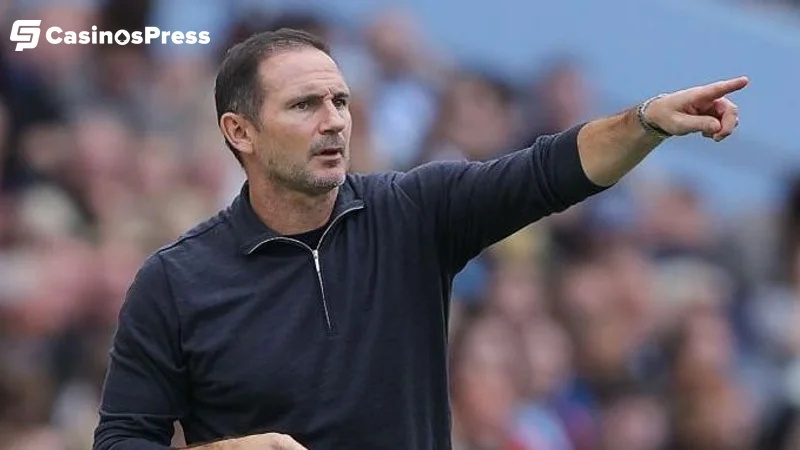
Lampard's situation at Coventry is one we're keeping a close eye on. He's taken a Championship job after difficult spells at Everton and Chelsea, and the long-distance arrangement he's chosen mirrors what Pulis described as useful, not disruptive.
Coventry aren't a glamour club, but they're a club with ambition and a decent squad. If Lampard can replicate even some of the structured, results-focused approach that long-distance managers like Pulis described, then the Sky Blues could be one of the better value bets in the Championship this season.
We're not saying the commute makes the manager. But there's a genuine case that managers who deliberately separate their work life from their home life develop a focus that managers who blur those boundaries sometimes lack.
Our Read on It
The conventional wisdom says a manager needs to be embedded in the community, living and breathing the club every hour of the day. Pulis pushes back on that, and he's got the career record to back it up.
What actually matters is whether the manager is present when it counts, prepared, honest with the staff, and obsessive about the details. Whether he drives home to Dorset or stays in a Staffordshire apartment is largely irrelevant if all of that is in place.
For Premier League betting purposes, managerial stability is one of the most underrated factors going into a season. Clubs with managers who have clear routines, organised minds, and genuine buy-in from their staff tend to outperform expectations more often than not. Long-distance arrangements, counterintuitively, might actually help with that.
Don't dismiss a manager just because he doesn't live next door to the training ground. Pulis proved that means nothing. Results are the only address that matters.
Editorial Note: Marcus Osei
Senior football writer and tactical analyst with 12+ years covering the Premier League, Champions League, and world football. Born in Accra, raised between London and Kuala Lumpur.