
Over 65,000 Junk Food Ads at the World Cup: Football’s Biggest Health Problem Nobody Wants to Talk About


Real Madrid loanee scores first career hat-trick in stunning Lyon debut
Football has a junk food problem, and the 2026 World Cup just made it impossible to ignore.
New analysis of the tournament's 104 matches found that junk food and drink brands were visible to TV viewers 65,722 times during live play. That works out at over 28 hours of exposure across the whole tournament, or roughly one in every six minutes of football watched. If you sat through every single match at the World Cup, you were looking at a burger, a bag of crisps, or a sugary drink brand for nearly a full day and a half of combined screen time.
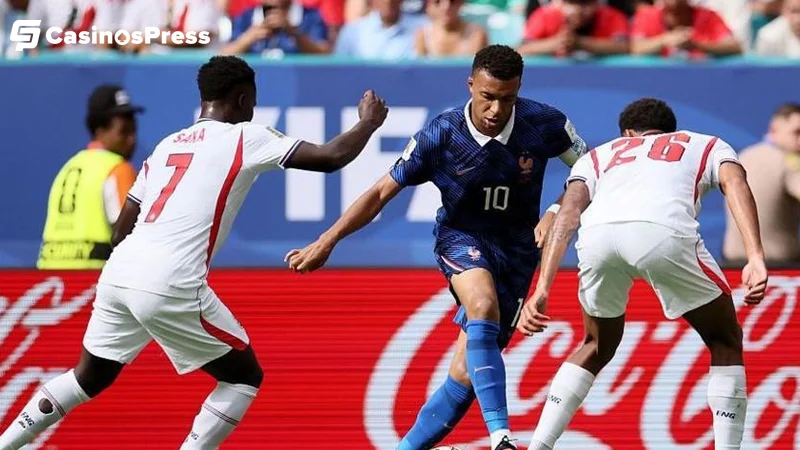
These aren't ads in the traditional sense either. They weren't in the half-time break or the pre-match show. They were on the pitchside hoardings, inside the stadiums, baked into the live broadcast and visible to every viewer in every country watching the international feed. You couldn't skip them or look away.
The Four Brands Dominating the Boards
Coca-Cola led the way with 21,893 logo appearances. McDonald's came in second with 13,915. Powerade, which is also owned by Coca-Cola, added another 12,777. Lay's crisps rounded out the top four with 12,087 appearances. All four are official Fifa partners.
That detail matters. This isn't advertising that snuck in through a side door. These brands paid for the privilege of being seen at the World Cup, and Fifa welcomed them. The partnership model is the entire point. These logos are there because the money they bring funds the tournament itself, along with youth football programmes, infrastructure projects, and everything else Fifa funds globally.
Fifa's own response made exactly that argument, pointing to social campaigns built around health, inclusion, and activity that reached audiences throughout the tournament. They're not wrong that the money gets recycled into football. The question is whether that justifies what viewers are actually seeing.
How It Compares to Gambling Ads
Here's the stat that really puts things into perspective. Junk food and drink logos appeared ten times more often during World Cup matches than gambling brands. They showed up seven times more frequently than alcohol. Against cryptocurrency brands, the gap was almost 25 to one.
Gambling advertising in football has been one of the dominant debates in the sport for years. There have been campaigns, legislation, shirt sponsorship bans in certain leagues, and constant media scrutiny. And yet gambling brands were a tenth as visible as McDonald's and Coca-Cola during the biggest football tournament on earth.
In the UK, a ban on junk food advertising before 9pm has been in place since October 2025. Burgers, crisps, sugary drinks, all restricted during hours when children are most likely to be watching TV. The World Cup airs across all hours and the hoardings inside the stadium fall completely outside that legislation. It's a clean loophole. The regulation applies to broadcast slots, not to what's physically inside the ground and visible during live play.
Why This Matters Beyond the Health Headlines
The World Cup is the most watched sporting event on the planet. The 2026 edition expanded to 48 teams precisely to grow the global audience. More matches, more countries, more viewers, and as this research shows, more exposure for the brands bankrolling it.
Childhood obesity is a genuine crisis. NHS data from 2024 showed 15% of children in the UK were clinically obese, with another 26% classified as overweight. Governments around the world are tightening the rules around how and when unhealthy food is marketed, particularly to young audiences. Sport is supposed to be part of the answer to that problem, not one of the mechanisms making it worse.
The comparison to tobacco is a blunt one, but it's not without logic. The tobacco industry spent decades using sport and entertainment to normalise its products before legislation eventually pushed it out. Junk food advertising is following a similar path, embedding itself into moments of excitement and national pride, making these brands feel like part of the game itself.
Fifa won't walk away from Coca-Cola or McDonald's money any time soon. The commercial reality of running a 48-team World Cup makes that almost certain. But the pressure for international standards around this kind of advertising is only going to grow, and the numbers from the 2026 tournament have given that argument a very solid foundation to build on.
The World Cup is football at its most powerful. That power is currently being used to sell us crisps and fizzy drinks for 28 hours straight.
Editorial Note: Marcus Osei
Senior football writer and tactical analyst with 12+ years covering the Premier League, Champions League, and world football. Born in Accra, raised between London and Kuala Lumpur.