
WSL’s Global Takeover Is Great for the League But Could Cost England Dearly


Real Madrid loanee scores first career hat-trick in stunning Lyon debut
The Women's Super League is thriving. Crowds are up, transfer fees are exploding, and Ballon d'Or winners are choosing London over Barcelona. On paper, that's a success story worth celebrating. But dig a little deeper and there's a real tension brewing at the heart of women's football in England, one that could take years to fully surface.
The Night That Said Everything
London City Lionesses beat Manchester United on the opening night of the 2025-26 season with a starting XI containing zero English players. Not one. It was the first time a WSL side had done that on the opening day of a season. Two days later, Tottenham named just one British player in their starting lineup against West Ham.
Those two results, in isolation, tell you where the WSL is heading. Clubs are spending big, scouting globally, and picking whoever gives them the best chance of winning. That's football. We get it. We'd all do the same.
But when you zoom out, the picture starts to look different.
The Numbers Don't Lie
The proportion of homegrown players starting at least half a WSL season has dropped to under a third. That's a steady, three-season decline. Across Europe, it's a completely different story. In France, 61% of regular starters are French. Germany sits at 63%. Spain comes in at 69%. England is heading in the opposite direction to every comparable league on the continent.
The WSL's expansion from 12 to 14 clubs has offered a slight bump in homegrown minutes this season, mostly because promoted sides like Birmingham City, Crystal Palace and Charlton Athletic naturally carry more domestic talent. Once those clubs adapt and start spending, that number could fall again.
Manchester City's manager Andree Jeglertz said it plainly. If picking zero young English players gives City the best chance of winning, that's what he'll do. We respect the honesty, but it confirms the issue perfectly. Club ambition and national team health are pointing in opposite directions right now.
England Are Already Paying the Price
England are two-time European champions. That's not nothing. But seven of the players who started the Euro 2022 final also started against Spain in June 2025. The same core, cycling through major tournaments, with very little fresh blood breaking through to challenge them.
The 4-0 defeat to Spain in Majorca, which knocked England out of automatic World Cup qualification, showed what happens when that core gets exposed. Now they face a two-legged play-off just to reach the 2027 Women's World Cup in Brazil. For a country that won back-to-back Euros, that's a sobering reality.
At Under-20 level, the signs are equally concerning. England went out 3-0 to Nigeria in the last 16 of the Women's Under-20 World Cup in Poland. In 2022 and 2024, they didn't even qualify. Compare that to the class of 2018, when Alessia Russo, Lauren Hemp and Georgia Stanway led a run to third place, and the drop-off in the pipeline is hard to ignore.
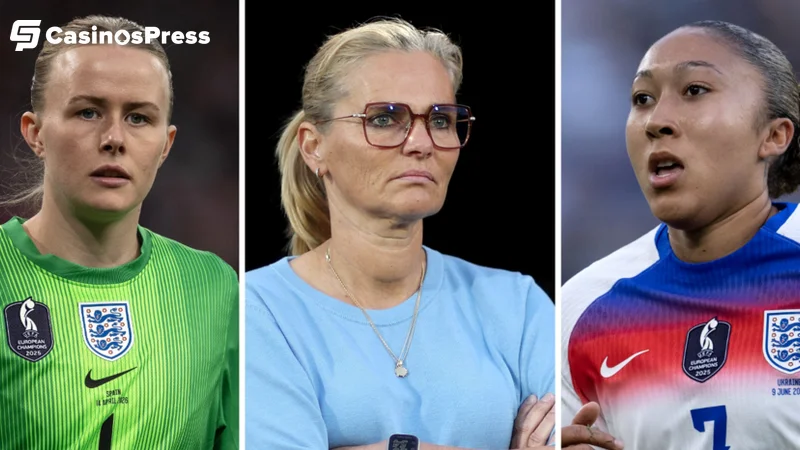
Sarina Wiegman has handed debuts to 21 players since taking charge but only three of those, Lauren James, Hannah Hampton and Lucia Kendall, have become regular starters. The pathway from academy to senior squad is narrowing fast in women's football, and the WSL's recruitment model is a significant reason why.
What Happens Next Matters
The FA's current rules require WSL clubs to include eight homegrown players in their squad lists. Former England striker Ellen White has already said that isn't enough, and she's right. A quota on the squad list is very different from guaranteed minutes on the pitch. You can carry eight homegrown players and still field a starting XI without one of them.
The FA has approved a plan to allow WSL academy sides to compete in the National League from 2027-28, with Chelsea already confirming they'll enter a side. The theory is sound. Young English players need competitive minutes, and right now they're not getting them at top clubs. Whether this actually moves the needle on England's international prospects is a different question.
In our view, the homegrown quota needs updating now, not in three years. If the WSL wants to keep growing without hollowing out the national team pipeline, some form of mandatory minimum presence on the pitch is the only lever that will genuinely work. The clubs won't do it voluntarily. The evidence is already clear.
The WSL is undeniably the best women's league in the world right now. But if women's football in England is serious about being the best nationally too, something has to give before the pipeline runs completely dry.
Editorial Note: Marcus Osei
Senior football writer and tactical analyst with 12+ years covering the Premier League, Champions League, and world football. Born in Accra, raised between London and Kuala Lumpur.