
Lee Gi-hyuk’s Military Gaffe Says More About South Korean Football Than Just One Celebration


Real Madrid loanee scores first career hat-trick in stunning Lyon debut
Lee Gi-hyuk didn't just put his foot in his mouth. He accidentally pulled back the curtain on one of the most unique pressures in world football.
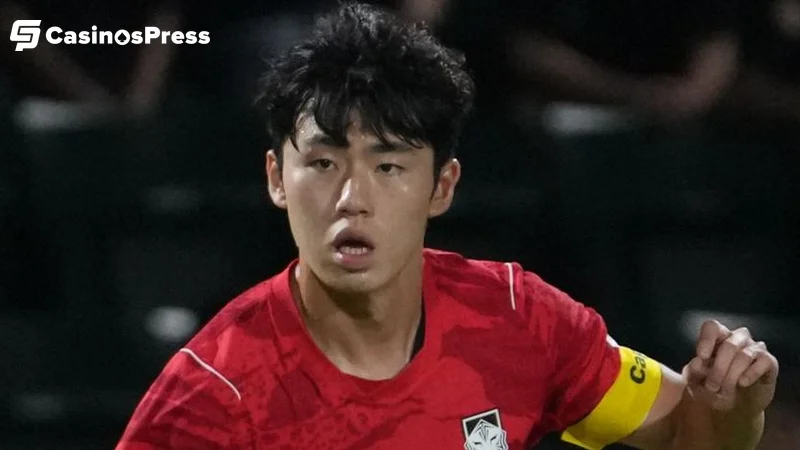
The South Korea captain won gold at the Asian Games, beating hosts Japan 1-0 in the final, and in the heat of the moment lifted his medal and declared he was 'not going to the military'. The clip spread fast. The backlash followed. The apology came shortly after.
On the surface, it looks like a young footballer getting carried away. Go a bit deeper, and there's a genuinely fascinating story about what international football means to South Korean players, and why gold at the Asian Games carries weight that most footballers around the world simply cannot relate to.
Why a Gold Medal Is Worth More Than Glory in South Korea
This isn't just about pride or prize money. South Korean law requires almost all male citizens to complete between 18 and 21 months of active military service before they turn 28. For a professional footballer, that's a career-defining interruption at the exact age when players typically hit their peak.
The government offers an exemption, cutting that obligation down to basic training of less than a month, for athletes who win gold at the Asian Games or any medal at the Olympics. So when South Korea fields a football team at the Asian Games, the stakes for those players go far beyond the scoreboard.
Son Heung-min is the most famous example. He served just three weeks in 2020 thanks to his gold medal from the 2018 Asian Games. Without that exemption, his Premier League career with Tottenham would have faced a serious disruption during some of his best years. It's a system that ties athletic achievement directly to civil obligation, and for footballers, it changes everything about how these tournaments feel.
Lee Gi-hyuk and the Moment That Got Away From Him
Lee is 26 and plays for Gangwon FC in the K League. He was one of the overage players brought into South Korea's Under-23 squad for the tournament, which means the exemption question was very real and very personal for him.
Winning the final, beating Japan on their home soil, and knowing you've just dodged nearly two years of military service all at once? We can understand why the emotion spilled over. The problem is how it spilled over.
Declaiming 'not going to the military' while waving your gold medal is the kind of thing that plays badly in a country where millions of men have completed or are currently completing mandatory service with no escape route. Lee seemed to grasp that quickly. His apology was direct and showed genuine reflection, acknowledging that as an adult he should have thought before speaking and expressing regret for those serving who supported the team.
Golfer Tom Kim also earned an exemption through the same tournament, which tells you how seriously South Korean athletes across multiple sports treat this event.
What This Means for South Korean Football Going Forward
From a football perspective, the exemption system is one of the reasons South Korea tends to take the Asian Games seriously while many other nations treat it as a secondary competition. When your best players have a direct personal incentive to win gold, the motivation is built in at a level no bonus structure or trophy alone can replicate.
It also means South Korean clubs and the national setup have to manage the age eligibility rules carefully. Bringing in overage players like Lee into the Under-23 squad is a strategic call, but it also puts those specific players under enormous scrutiny because the stakes for them are so much higher than for the younger members of the group.
The flip side is exactly what we saw here. When the relief and joy of winning collide with the weight of what the exemption actually means, players can say things that land badly with the public.
Our Take
Lee Gi-hyuk made a clumsy mistake, but we wouldn't read too much into the character of the man based on a few words said in the immediate rush of a gold medal win. The apology was genuine and came quickly.
The more interesting story is the system itself. South Korean football operates under pressures that most European fans and pundits never stop to consider, and moments like this one are a reminder of just how different the stakes can be depending on where you play your football.
Editorial Note: Marcus Osei
Senior football writer and tactical analyst with 12+ years covering the Premier League, Champions League, and world football. Born in Accra, raised between London and Kuala Lumpur.